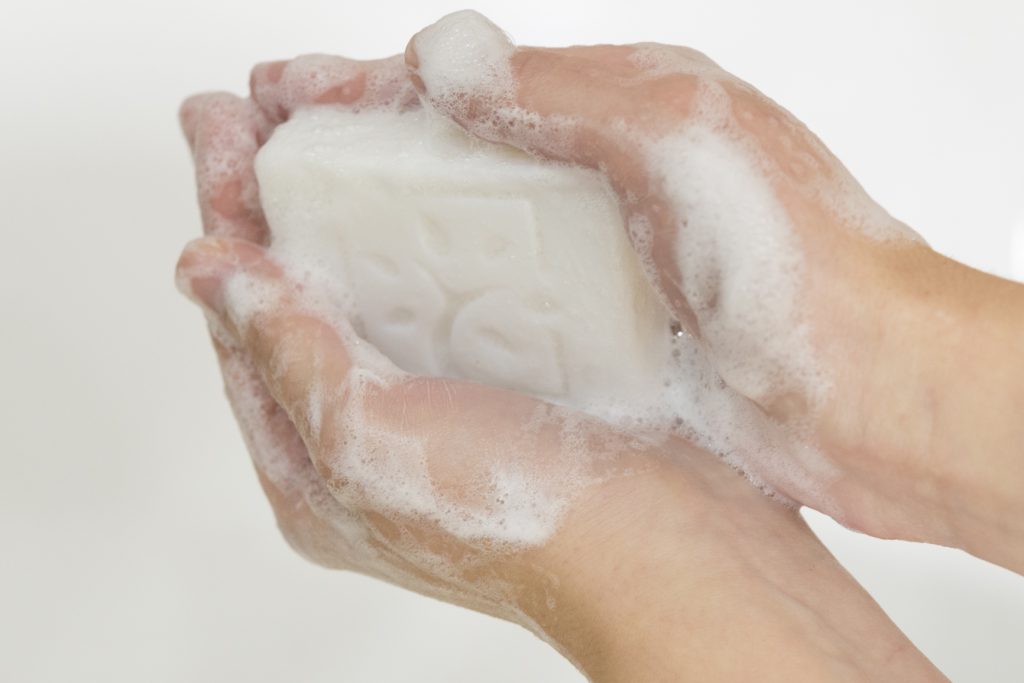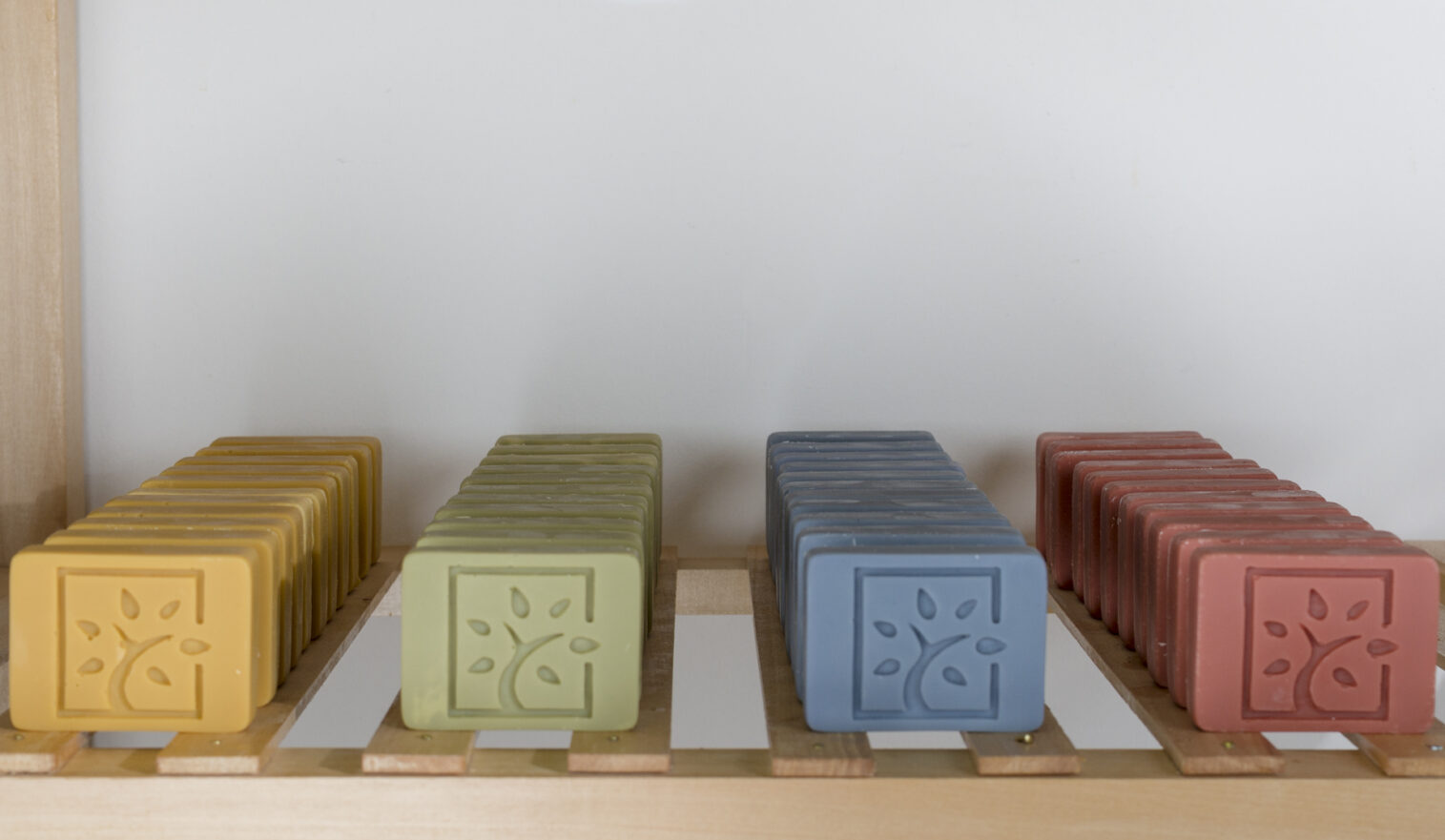
Hard soap is made in three ways: cold process, hot process and “melt and pour”. We work only with the first. It’s the slowest of the three, and that’s the reason we chose it.
We don’t boil the oils
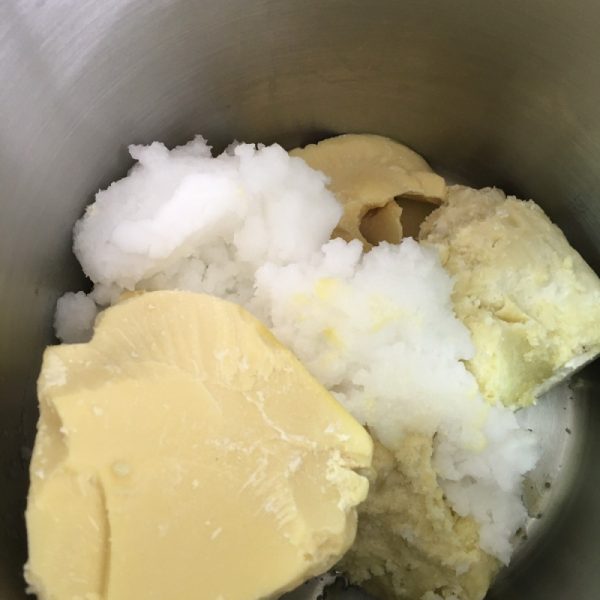
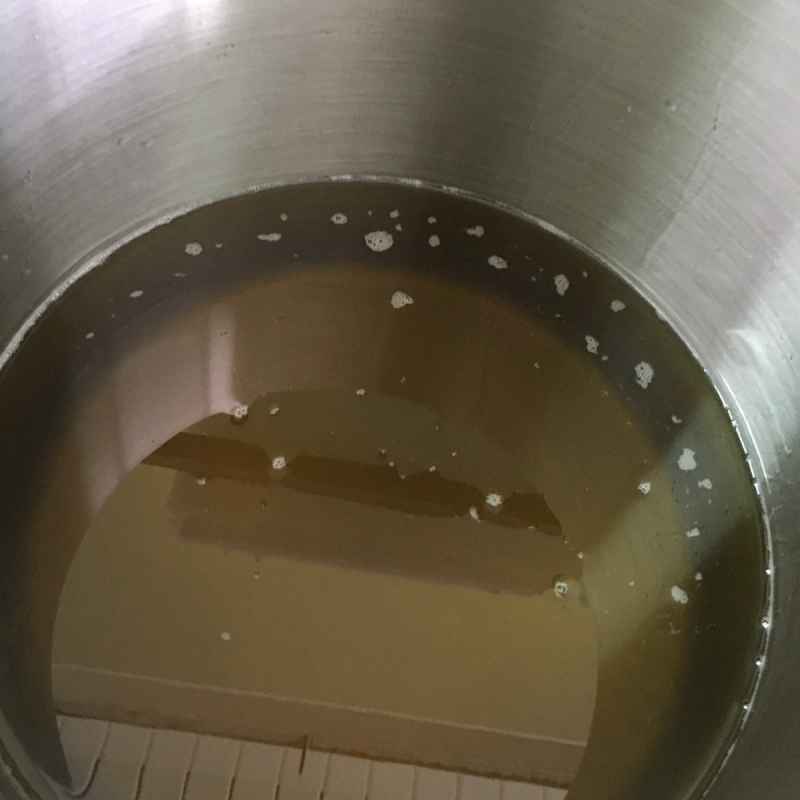
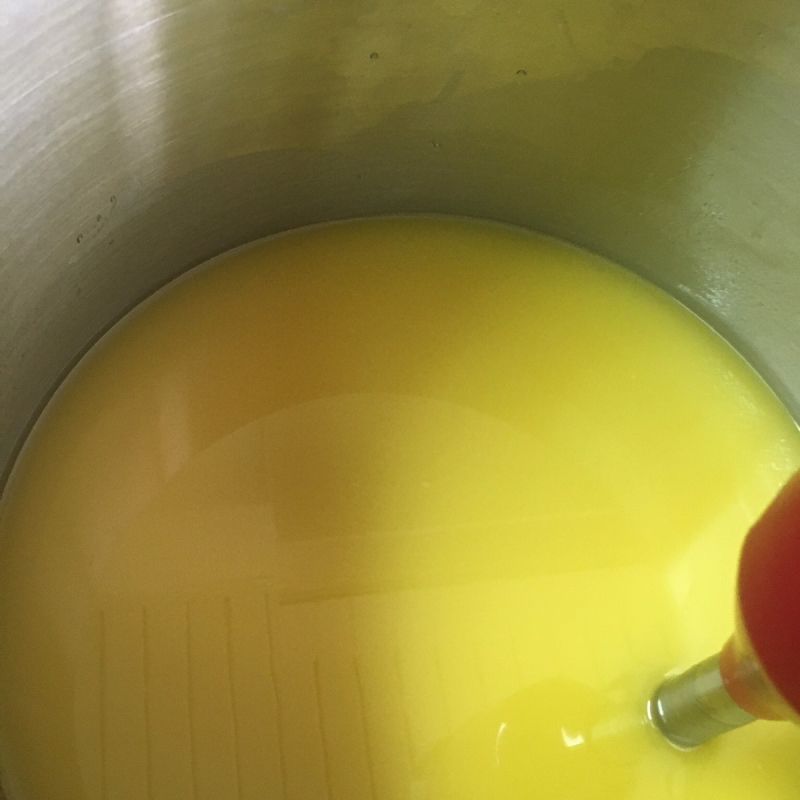
In the hot process the mixture is cooked to speed up the reaction. In ours it isn’t. The solid butters — cocoa, shea and coconut — we melt at a low temperature, and the olive oil goes in as it is. The less heat you give a cold-pressed oil, the more of its natural components, such as vitamin E, stay in it.
The glycerin stays in
When sodium hydroxide meets plant oils, two things come out: soap and glycerin. Glycerin is a humectant — it draws in moisture and helps your skin hold on to it after washing.
In industrial production it’s extracted and sold separately, because it’s worth more than the soap it formed in. The commercial bar leaves the factory without it. We don’t take it out — all the glycerin formed during saponification stays in the soap. That’s why your skin doesn’t feel tight in the same way after natural soap.
That is the whole difference between “soap” and “soap”, told through one ingredient.
Six weeks on the shelf
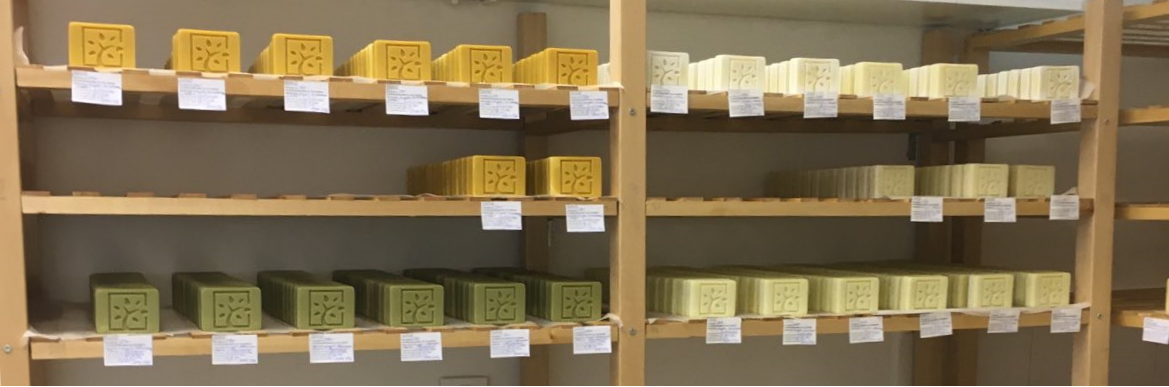
After the mold, the soap isn’t packed. It’s left for three to six weeks to cure — literally like cheese. During that time the excess water evaporates, the reaction runs to completion and the bar hardens.
A cured soap is harder, makes a denser lather and lasts longer on the soap dish. You see the difference from the first shower and feel it down to the last piece.
Six weeks on the shelf means six weeks in which that batch earns nothing. That’s the price of the method, and we’re happy to pay it.
Only base oils and essential oils
The recipes use organic oils — cocoa, shea and coconut — and extra virgin olive oil. The scent comes from essential oils: rose, geranium, lavender, sandalwood, lemongrass, mint, rosemary and eucalyptus. No synthetic fragrances.
Essential oil is more expensive, more temperamental and weaker than synthetic fragrance, and it fades faster too. We work with it because its scent comes from nature — the soap smells fainter, but natural and never overpowering.
How to recognize it
A hand-poured cold-process soap is recognized by two things: the surface may show a light whitish bloom from the high share of cocoa butter, and the scent is noticeable up close, not from across the room. These aren’t defects. This is what a soap poured by hand looks like — each one on its own, in its own mold.